Cleaner water. Less maintenance. Better soaking.
Hot Tub Water Filtration Evolution (2010–2026)
Hot tub ownership has changed dramatically over the last 15 years. Improved filtration, smarter circulation, and advanced water care systems have made today’s hot tubs cleaner, easier to maintain, and more enjoyable to own.
- June 5, 2026
- TheWellnessInsiderCanada
- 5:10 pm
Quick Answer
Hot tub water filtration has evolved from simple cartridge-and-chemical systems into complete water management platforms that combine improved filters, dedicated circulation pumps, smarter plumbing, and supplemental sanitation technologies to reduce maintenance and improve water quality.
From Basic Filtration to Water Management
Fifteen years ago, most hot tubs relied on:
- Standard cartridge filters
- Jet pumps performing filtration duties
- Manual chemical balancing
- Limited circulation cycles
- More frequent water changes
Owners often spent more time maintaining water than enjoying the spa.
Today, modern filtration focuses on keeping water consistently clean with less owner involvement.
Modern systems emphasize:
✓ Continuous circulation
✓ Multi-stage filtration
✓ Reduced chemical usage
✓ Smarter plumbing design
✓ Automated water care support
2010–2013: Bigger Filters Improve Performance
The first major improvement came through larger and more efficient filtration.
Larger Surface Area Filters
Manufacturers increased filter capacity to:
- Capture more debris
- Improve water flow
- Extend cleaning intervals
- Reduce stress on pumps
This period introduced:
- Larger pleated filters
- Multi-cartridge systems
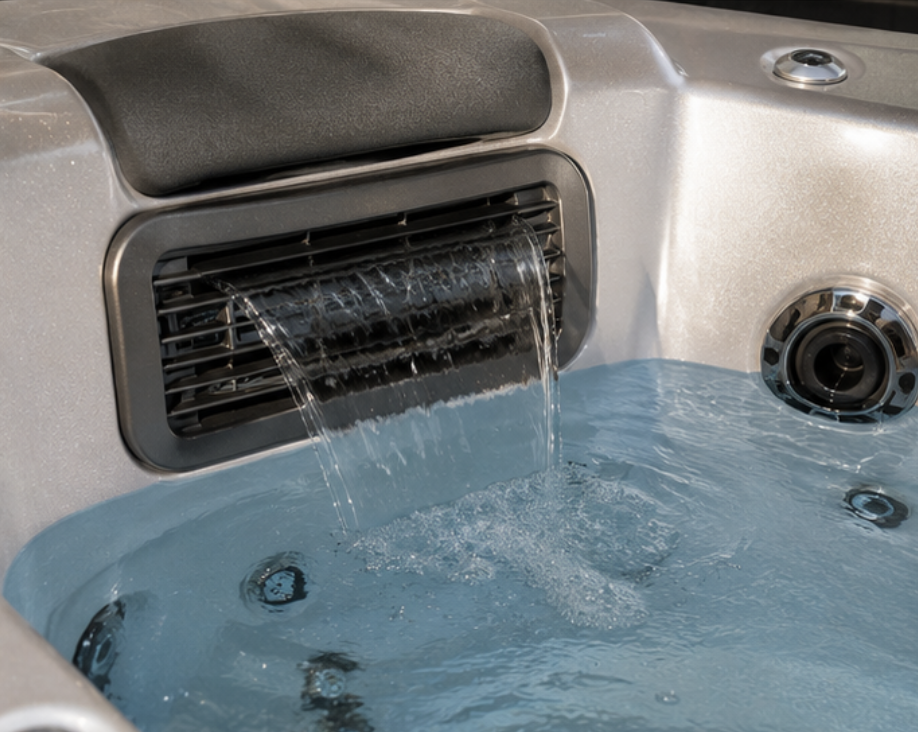
- Improved skimming capability
For many owners, maintenance immediately became easier.
2013–2017: Continuous Circulation Changes the Industry
One of the biggest improvements wasn’t the filter itself.
It was keeping water moving.
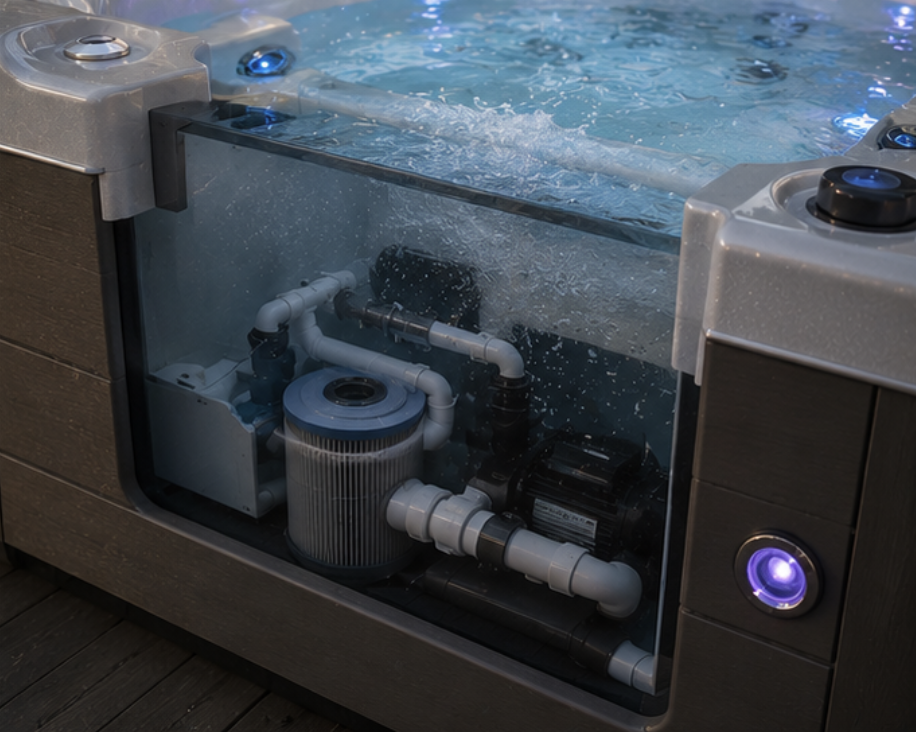
Dedicated Circulation Pumps
Benefits included:
- Continuous filtration
- Better sanitizer distribution
- Lower operating noise
- Increased energy efficiency
- Cleaner water consistency
Water was no longer sitting stagnant between filtration cycles.
This became one of the biggest ownership improvements in premium hot tubs.

Wellness Insider Tip
Don’t compare hot tubs based only on filter count. A properly engineered circulation system often matters more than the number of filters.
2016–2020: Alternative Water Care Arrives
Manufacturers started looking beyond traditional chemical management.
New Technologies Included:
Saltwater Systems
Generate sanitizer automatically.
UV Support Systems
Assist in reducing contaminants.
Ozone Systems
Help supplement traditional sanitation.
Mineral Support
Provide additional water conditioning support.
These technologies improved ownership experience but worked alongside filtration—not instead of it.
2020–Today: Smart Water Management
Modern premium hot tubs combine multiple systems into one water-care ecosystem.
Typical process:
- Surface skimming
- Mechanical filtration
- Continuous circulation
- Supplemental sanitation
- Automated scheduling
Features increasingly available:
- App-connected reminders
- Dedicated circulation systems
- Improved plumbing efficiency
- Lower maintenance demands
- Better overall ownership experience
Today’s hot tubs require less daily attention than previous generations.
Wellness Insider Tip
Ask every dealer: “How does your system keep water clean?”
The answer often reveals more than jet count, horsepower, or lighting features.
Has Modern Filtration Reduced Ownership Costs?
In many cases, yes.
Better filtration may reduce:
- Chemical use
- Water replacement frequency
- Cleaning time
- Pump wear
- Long-term maintenance effort
Maintenance still matters—but ownership has become considerably easier.
2024–Today: The Rise of Low-Chemical Water Care
One of the newest developments in hot tub water care is the move toward dramatically reducing traditional sanitizer use while maintaining clean, enjoyable water.
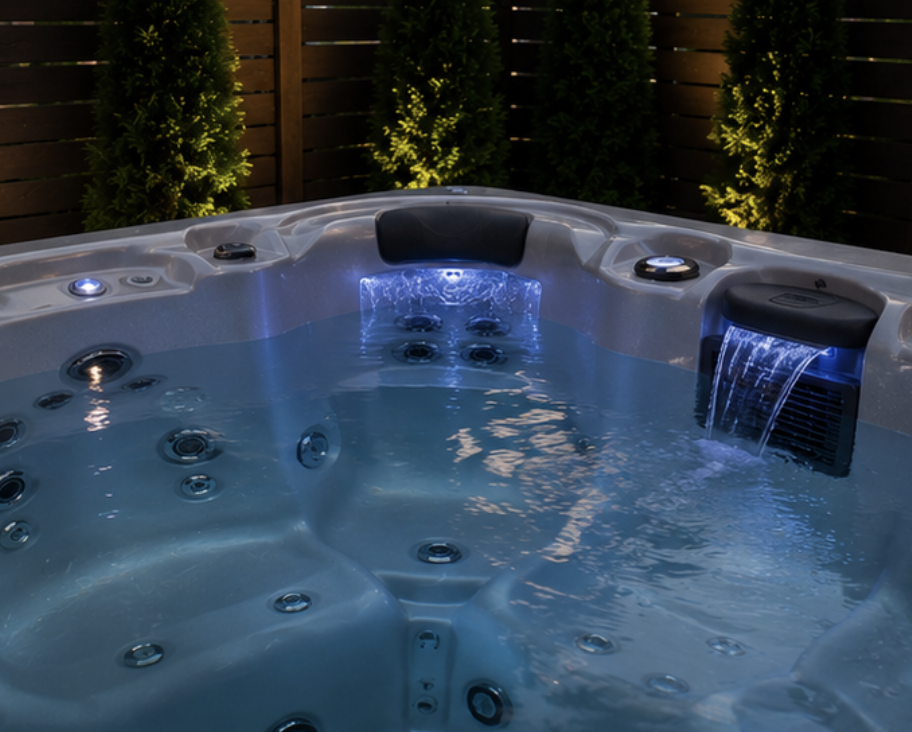
A recent example is Jacuzzi True Water®, which introduces nanobubble-based water care into home spas.
Rather than relying primarily on chlorine or bromine, the system generates trillions of oxygen-filled nanobubbles designed to continuously interact with contaminants throughout the spa water. Jacuzzi states this approach delivers water that is 99.9999% chlorine-free while removing 99.9% of bacterial and viral contaminants in testing.
According to Jacuzzi, the system is designed to:
- Reduce dependence on traditional chlorine routines
- Lower ongoing maintenance requirements
- Produce softer-feeling water
- Minimize chemical smell
- Simplify ownership experience
This technology reflects an important shift in the industry.
For years, filtration improvements focused on capturing debris.
Now the newest generation is focused on changing how water itself is managed.
Not All Hot Tub Filtration Is Created Equal
One of the biggest mistakes buyers make is assuming every hot tub filters water the same way.
Two hot tubs may look nearly identical on the showroom floor and both advertise “advanced filtration,” but what happens behind the cabinet can be completely different.
Some systems rely almost entirely on standard filtration and sanitizer.
Others combine multiple technologies working together.
Questions worth asking before buying:
- Does the spa use a dedicated circulation pump?
- Is ozone included or optional?
- Is UV included?
- Is sanitation standard or upgraded?
- How many filtration stages are included?
- How often does water circulate?
- What maintenance is still required?
- Are replacement filters proprietary?
These questions often impact ownership experience more than jet count or lighting packages.
The reality is simple:
Water care technology can significantly change how much time you spend maintaining your spa.
Wellness Insider Tip
If low maintenance is high on your buying checklist, ask whether the spa uses traditional sanitation, saltwater generation, UV/ozone support, or emerging low-chlorine systems like nanobubble water care. The answer can change your ownership experience more than the jet package.
Modern Hot Tub Water Technologies Explained
Today’s hot tubs typically combine multiple approaches to keep water clean.
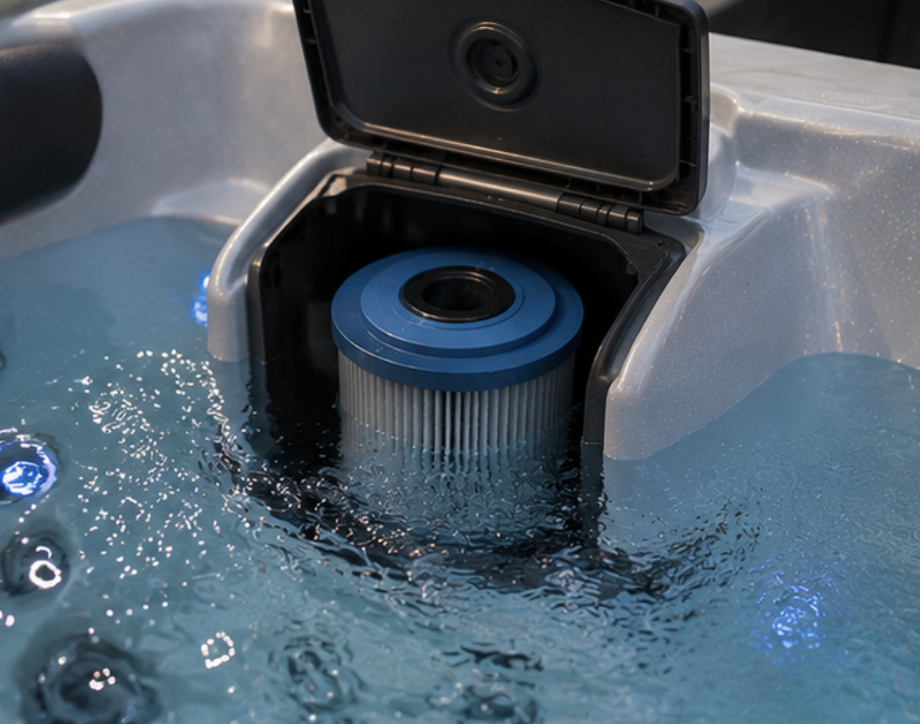
Standard Mechanical Filtration
The foundation of every system.
Water passes through a physical filter that removes:
- Dirt
- Hair
- Debris
- Oils
- Fine particles
This alone does not sanitize water.
Ozone Support Systems
Ozone introduces an oxidizer into circulating water.
Benefits:
- Helps reduce sanitizer demand
- Assists with breaking down contaminants
- Works automatically during circulation
Limitations:
- Does not replace routine maintenance
Common Availability:
✓ Included on some premium models
✓ Optional upgrade on others
UV Water Treatment
Ultraviolet light treats circulating water as it passes through the system.
Benefits:
- Helps reduce microorganisms
- Supports sanitizer effectiveness
- Operates automatically
Limitations:
- Water must pass through the treatment area
- Still requires ongoing maintenance
Common Availability:
✓ Premium models
✓ Optional upgrades
UV + Ozone Combination Systems
Some premium manufacturers combine UV and ozone.
Benefits:
- Multiple layers of treatment
- Lower sanitizer demand
- Improved overall water management
This has become increasingly popular in premium hot tubs.
Saltwater Systems
Saltwater systems generate sanitizer automatically from dissolved salt.
Benefits:
- Less manual dosing
- Softer-feeling water
- More automated ownership
Limitations:
- Still requires balancing and maintenance
Nanobubble Water Systems (Emerging Technology)
Newer systems are beginning to use oxygen-rich nanobubble technology to reduce reliance on traditional chlorine routines.
Benefits:
- Lower chemical handling
- Softer water feel
- Increased automation
This represents one of the newest directions in premium spa ownership.
Wellness Insider Tip
The goal of better filtration is not “maintenance free.”
The goal is less maintenance, cleaner water, and more time enjoying your hot tub.
Even the most advanced systems still benefit from:
- Regular filter cleaning
- Water testing
- Scheduled water changes
- Periodic system care
The best hot tubs don’t eliminate ownership responsibilities—they reduce them.
Modern Water Technology Comparison
| Technology | Filters Debris | Reduces Sanitizer | Included Standard? | Maintenance Level |
|---|---|---|---|---|
| Standard Filter | Yes | No | Usually | Moderate |
| Ozone | Partial | Yes | Varies | Lower |
| UV | No | Yes | Varies | Lower |
| UV + Ozone | Partial | Yes | Premium | Lower |
| Saltwater | Partial | Yes | Premium | Lower |
| Nanobubble | Partial | Yes | Emerging | Lowest* |
*Still requires maintenance.
The Wellness Insider Canada Verdict
If there’s one thing we hope buyers take away from this article, it’s this:
Don’t just ask how a hot tub feels—ask how it stays clean.
Over the last 10–15 years, hot tub water care has evolved from simple filters and regular chemical routines into more advanced systems that may include dedicated circulation pumps, ozone support, UV treatment, saltwater generation, and emerging technologies designed to reduce maintenance and improve ownership experience.
But not every hot tub approaches water care the same way.
Some models still rely primarily on traditional filtration and manual routines, while others layer multiple technologies together to help reduce chemical demand and simplify ownership.
That doesn’t mean modern hot tubs are maintenance free.
Every hot tub still requires care, water testing, filter cleaning, and periodic maintenance.
The difference is that better-designed systems can reduce how often you need to think about it.
When shopping, don’t stop at questions like:
- How many jets does it have?
- How powerful is the massage?
- What lights are included?
Also ask:
- How does the filtration system work?
- Is circulation continuous or scheduled?
- Is ozone or UV included or optional?
- What maintenance is still required?
- How often are filters cleaned or replaced?
- Are there technologies that reduce chemical usage?
Because ultimately, the goal of owning a hot tub shouldn’t be spending more time maintaining it.
It should be spending more time enjoying it.
The best hot tubs don’t eliminate ownership responsibilities—they simply help you work less and relax more.
Frequently Asked Questions
Usually, yes—but not no maintenance.
Modern filtration systems can reduce chemical usage, improve water clarity, and lower the amount of hands-on care required. Owners should still clean filters, test water, and complete routine maintenance.
No.
Hot tubs can vary significantly in how they manage water. Some rely primarily on standard cartridge filtration and sanitizer, while others include dedicated circulation pumps, ozone, UV treatment, saltwater systems, or newer water-care technologies.
Ask questions such as:
- How does the filtration system work?
- Is there a dedicated circulation pump?
- Is ozone or UV included?
- Are upgrades required?
- How often are filters cleaned?
- What maintenance is still required?
- Does the system reduce chemical usage?
Understanding filtration can impact long-term ownership more than many buyers realize.
Neither is automatically better—they serve different purposes.
Ozone helps oxidize contaminants in water, while UV treats water as it passes through the system. Some premium hot tubs combine both technologies for layered water care.
No.
Saltwater systems still generate sanitizer and require balancing and maintenance. Their main advantage is reducing manual chemical handling and simplifying ownership.
A dedicated circulation pump continuously moves water through filtration and water-care systems.
Benefits may include:
- Cleaner water
- Better filtration efficiency
- Lower operating noise
- More consistent water quality
Nanobubble systems use extremely small oxygen-filled bubbles designed to support water care and reduce reliance on traditional chlorine routines.
This is one of the newest developments in premium spa ownership.
For most owners:
- Quick rinse: Every 2–4 weeks
- Deep clean: Every 1–3 months
- Replacement: Follow manufacturer guidance
Usage, environment, and filtration design can change these intervals.
What's on Your Wellness Wishlist?

Help shape our future reviews, guides, and comparisons.
Thank You for Taking the Time to Visit our Site!
Was this Helpful?
Your feedback is always welcome as we are consistently looking to improve.